
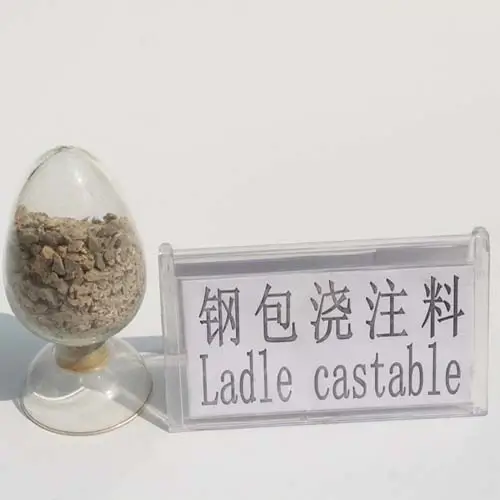
The use of inorganic non-metallic wear-resistant materials such as SiC, corundum, and high-alumina ceramics instead of alloy metal wear-resistant materials has achieved excellent results in industries like cement and metallurgy, with significant economic benefits. Considering the operational characteristics of slag channel linings—which endure long-term exposure to acidic media and intense erosion—the selected high-strength acid-resistant wear-resistant material primarily consists of high-hardness corundum raw materials. It incorporates an appropriate amount of stainless steel fibers and utilizes a binder with strong acid resistance to provide sufficient structural strength. The lining cast with this material exhibits excellent acid resistance, dense structure, high strength, erosion resistance, and dimensional stability. Additionally, the construction method is simple, rapid, and highly mechanized.
Construction Process for Integral Casting of Slag Channel Lining
This paper details the construction process of an integral casting for a slag flushing channel in a 3200m³ blast furnace. The construction method is straightforward, delivering excellent overall performance and significant economic benefits.
Shape Design of Slag Channel Lining
During its flow through the slag flushing channel, molten slag primarily damages the channel bottom area. To reduce resistance from the slag, commonly used alloy lining plates adopt a U-shaped structure with a thickness of approximately 50 mm. The internally cast lining, made from high-strength acid-resistant and wear-resistant materials, retains the U-shaped design of the alloy lining plates while increasing the channel bottom thickness to 100–120 mm.
Remove the old alloy liner plates
During the downtime of the slag flushing channel, remove the existing alloy lining plates. After approximately one year of use, the alloy lining plates exhibit severe corrosion and wear, having nearly reached the end of their service life. Following removal of the alloy lining plates, clean the cement mortar used to secure the plates and thoroughly blow-clean the area.
Preparation and Installation of Templates
According to the dimensions of the slag flushing channel trench, prepare the casting formwork into a U-shape. Before placing the formwork into the trench, pre-weld V-shaped anchors onto the steel plates of the channel trench and thoroughly clean the area. After positioning the formwork, reserve the thickness of the castable lining at the bottom as per the design. Align the formwork left and right, then secure it in place.
Lining Casting Construction in Slag Chute
Mix the high-strength acid-resistant and wear-resistant castable according to the construction mix ratio until uniform. Strictly control the water content to prevent excessive thinning. Pour the mixed material into place and compact it using a vibrator.
Formwork Removal and Usage
The high-strength acid-resistant and wear-resistant material used in this application employs a quick-drying castable that requires no baking. Formwork can be removed and the structure put into service 24 hours after casting completion. This ensures a complete channel profile with no visible wear.
Usage Effect
Observations of the lining after use and decommissioning of a 2600m³ blast furnace slag flushing channel cast as a single unit using the aforementioned construction techniques and materials: The channel lining has now been in service for over four years without any repairs. Visually, the channel sidewalls remain intact, with approximately 20–30 mm of wear observed on the channel bottom. After four years of service, the channel bottom lining surface retains a certain degree of smoothness. The matrix has essentially achieved hardness comparable to that of the corundum particles. Wear of the corundum particles and matrix is synchronized, with no significant weak points observed. Based on the current state of use, it is anticipated that this lining can meet the service requirements for one generation of the blast furnace (approximately 10 years).
The slag flume in blast furnaces, as thermal equipment subjected to long-term acid corrosion and intense erosion during production, is cast with high-strength acid-resistant and wear-resistant materials to form an integral lining. This ensures a long service life with minimal maintenance requirements, thereby better meeting the operational demands of this critical component.
 English
  简体中文
简体中文