
I. What Are Refractory Materials?
Refractory materials generally refer to inorganic non-metallic materials with a refractoriness exceeding 1580°C. They encompass natural ores and various products manufactured through specific processes to meet particular requirements. Possessing certain high-temperature mechanical properties and excellent volume stability, they are essential materials for various high-temperature equipment.
II. Types of Refractory Materials:
- Acidic refractories typically refer to materials with SiO₂ content exceeding 93%. Their primary characteristic is resistance to erosion by acidic slags at high temperatures, though they readily react with alkaline melts.
- Alkaline refractories generally denote materials primarily composed of magnesium oxide or magnesium oxide and calcium oxide. These materials exhibit high refractoriness and strong resistance to alkaline slags.
- Aluminosilicate refractories are materials primarily composed of SiO₂-Al₂O₃. They are classified into three types based on Al₂O₃ content: semi-siliceous (Al₂O₃ 15–30%), clayey (Al₂O₃ 30–48%), and high-alumina (Al₂O₃ >48%).
- Cast refractories are products formed by melting a mixture at high temperatures and then casting it into specific shapes.
- Neutral refractories are materials that exhibit minimal reaction with either acidic or alkaline molten slag at high temperatures, such as carbon-based and chromium-based refractories. Some classifications also include high-alumina refractories in this category.
- Special refractories represent novel inorganic non-metallic materials developed from traditional ceramics and general refractories.
- Unshaped refractories are mixtures composed of refractory aggregates, powders, binders, or additives in specific proportions. They can be used directly or after mixing with suitable liquids. As a new type of unfired refractory material, its refractoriness is no less than 1580°C.
With China’s accession to the World Trade Organization, domestic refractory materials and products face increasing competition from long-life, energy-efficient, and functionalized foreign innovations, intensifying market rivalry. Experts emphasize that China’s refractory industry must accelerate optimization and restructuring by fostering strategic alliances, phasing out outdated production lines, strengthening R&D and operational management, and adjusting product portfolios to swiftly meet the evolving demands of both domestic and international steel industries.
III. What are the commonly used refractory materials?
Commonly used ordinary refractory materials include silica bricks, semi-silica bricks, clay bricks, high-alumina bricks, and magnesia bricks.
Commonly used special refractory materials include AZS bricks, corundum bricks, directly bonded magnesia-chrome bricks, silicon carbide bricks, silicon nitride bonded silicon carbide bricks, and non-oxide refractory materials such as nitrides, silicides, sulfides, borides, and carbides; and refractory materials such as calcium oxide, chromium oxide, aluminum oxide, magnesium oxide, and beryllium oxide. Commonly used thermal insulation refractory materials include diatomaceous earth products, asbestos products, and insulation boards.
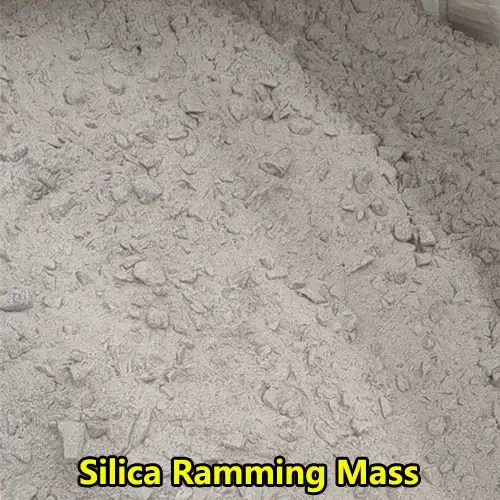
Commonly used monolithic refractory materials include furnace patching materials, refractory ramming mixes, refractory castables, refractory plastics, refractory mortars, refractory gunning mixes, refractory spraying mixes, refractory coatings, lightweight refractory castables, and taphole clays.
IV. What are the physical properties of refractory materials?
The physical properties of refractory materials include structural properties, thermal properties, mechanical properties, service properties, and workability properties.
The structural properties of refractory materials include porosity, bulk density, water absorption, permeability, and pore size distribution.
The thermal properties of refractory materials include thermal conductivity, thermal expansion coefficient, specific heat, heat capacity, thermal diffusivity, and thermal emissivity.
The mechanical properties of refractory materials include compressive strength, tensile strength, flexural strength, torsional strength, shear strength, impact strength, wear resistance, creep resistance, bond strength, and elastic modulus.
The service properties of refractory materials include refractoriness, load softening temperature, reheat linear change, thermal shock resistance, slag resistance, acid resistance, alkali resistance, hydration resistance, CO corrosion resistance, electrical conductivity, and oxidation resistance.
The workability properties of refractory materials include consistency, slump, flowability, plasticity, cohesiveness, resilience, setting properties, and hardening properties.
What are examples of highly refractory materials?
Refractory raw materials, such as alumina, magnesia, silica, zirconia, and carbon, form the foundation of all high-temperature industrial processes. Alumina and magnesia are the two most widely used oxides, valued for their high melting points, corrosion resistance, and mechanical strength.
What is basic refractory material?
Roughly, the raw materials of basic refractory are dolomite, magnesite, olivine and serpentine whose useful components are MgO, CaO, MgCO3, SiO2 and so on. Specifically, the raw materials of basic refractory are magnesia, magnesia spinel, magnesia calcium sand, magnesia chrome sand and magnesia zirconium sand.
What are common refractory materials?
The oxides of aluminium (alumina), silicon (silica) and magnesium (magnesia) are the most important materials used in the manufacturing of refractories. Another oxide usually found in refractories is the oxide of calcium (lime). Fire clays are also widely used in the manufacture of refractories.
What is the lifespan of refractory material?
Refractory has an average lifespan of about five years, but with proper maintenance the furnace has the potential to last for around 30 years. A furnace made of steel would start to creep and melt during its first batch delivery.
 English
  简体中文
简体中文